I think you’ll agree—dressing warm in winter shouldn’t mean looking like a walking comforter.
But that’s exactly how I felt on a cold-weather trip a few years ago. I packed “all the warm things”—thick sweaters, puffy coats, chunky scarves. And I was miserable. I felt like a marshmallow, stuffed into layers that didn’t breathe or move with me. Every photo from that trip? Bulky and stiff.
That trip taught me something important: most winter style advice just doesn’t work, especially for women over 50. We want warmth, yes—but also comfort, mobility, and a sense of polish.
In today’s post, I’m going to show you how to layer like a pro without the puff. You’ll learn smart fabric choices, layering tricks, and outfit formulas that keep you warm and stylish—no frump, no fluff.

Cardigan- Cece; camel trousers- option; boots- similar
Why Winter Layering Goes Wrong After 50
Layering sounds simple—just add more clothes, right? But sometimes, it’s easy to feel like winter outfits work against you instead of for you.
Here’s why:
Heavy fabrics drag you down.
Thick knits and wool-blend pieces can add bulk fast. They don’t always stretch, and they rarely drape well on mature bodies. Instead of feeling cozy, you end up feeling stiff and weighed down.
When it comes to cold weather dressing, the most important—and honestly most overlooked—factor is fabric composition.
Fabric composition determines:
- How warm something actually is
- How it feels on your skin
- How it drapes on your body
- How long it lasts in your wardrobe
- Whether it performs the way you expect
In cold weather, fabric isn’t a detail—it’s the foundation.
When shopping online, always scroll down and look for the fabric breakdown. Not just the name—the percentages.
Many brands will label something as “wool,” “linen,” or “cotton,” then quietly add the word blend. That blend might be:
- 20% wool
- 80% synthetic fibers
At that point, you are not getting the warmth or performance you think you are.
The Warmest Fabrics (And What They Actually Do)

Warm fabrics don’t just keep you warm—they trap and retain your body heat, acting as insulation so you stay comfortable without bulk.
Here’s a breakdown of the best cold-weather fabrics and how they perform.
Merino Wool
Merino wool comes from merino sheep and is softer than traditional wool.
Pros:
- Warm but lightweight
- Softer and less itchy
- Durable
- More affordable than cashmere
Cons:
- Slightly pricier than basic wool (but worth it)
This is one of my favorite everyday cold-weather fabrics.
Cashmere
Cashmere comes from the undercoat of Kashmir goats—and yes, quality matters.
Pros:
- Warmest of the wool family
- Lightweight and breathable
- Exceptionally soft
- Not itchy when high quality
Cons:
- Less durable
- Requires gentle care
- Highest price point
That said, cashmere can be an amazing thrift or resale find if you know what to look for.
Alpaca Wool
Alpaca wool has become more popular in recent years—and for good reason.
Pros:
- Warm
- Lightweight
- Durable
- Resists pilling
Cons:
- Slightly itchy for some
Comparable in price and performance to merino wool.
Proportions get thrown off.
Layering without a plan can hide your shape. Long tops over wide pants with a puffy coat? It swallows your figure. Balance matters more than ever when you want to stay warm and look pulled together.
Base layers are often the problem.
What you wear underneath sets the tone. Cotton tees and bulky undershirts trap moisture and bulk, not warmth. Without the right foundation, every added layer just makes things worse.
The good news? Once you fix these common mistakes, layering becomes your secret weapon—not your winter enemy.
Start With the Right Base Layer

The base layer is where warm and polished begins. It should be soft, slim, and nearly invisible—keeping you cozy without adding bulk.
If you are wearing skirts or dresses, or looser fitting trousers, fleece lined tights help keep you warm.
Lightweight thermals are your best friend.
Look for options that hug your body without squeezing. I love Cuddl Duds for this—they’re soft, warm, and designed to disappear under your clothes. You get insulation without the itch or puff. A popular option is Uniqlo’s Heatteach tops and bottoms. 32 Degrees is another great option for thin but warm base layers.
The right fabrics make a big difference.
Choose pieces made from thin fleece, merino wool, or modern blends like polyester-spandex. These materials trap heat, wick moisture, and move with you. No stiff cotton here—cotton holds onto dampness and loses warmth fast.
What to avoid? Bulky basics.
That oversized long-sleeve tee might feel comfy at home, but layered under sweaters or coats, it bunches and shows. Skip anything thick, loose, or lumpy. Your base layer should feel like a second skin—easy to forget you’re even wearing it.
A smart base keeps everything else in place. When it fits right, you can add layers without losing your shape—or your comfort. With the right base layers, you can wear almost anything you want in the winter.
Add Structure With Mid-Layers
Once your base layer is in place, the mid-layer adds shape—and style.
Choose pieces that define, not drown.
Instead of thick, slouchy sweaters, go for fitted cardigans, tailored blazers, or fine-knit pullovers. These pieces add warmth while keeping your waist visible. A slim belt over a cardigan or a shaped blazer can work wonders.
Blazers and vests bring polish and flexibility.
A knit blazer or structured vest instantly elevates even casual looks. They layer easily over thermals, look great open or belted, and give you room to move without the puff.
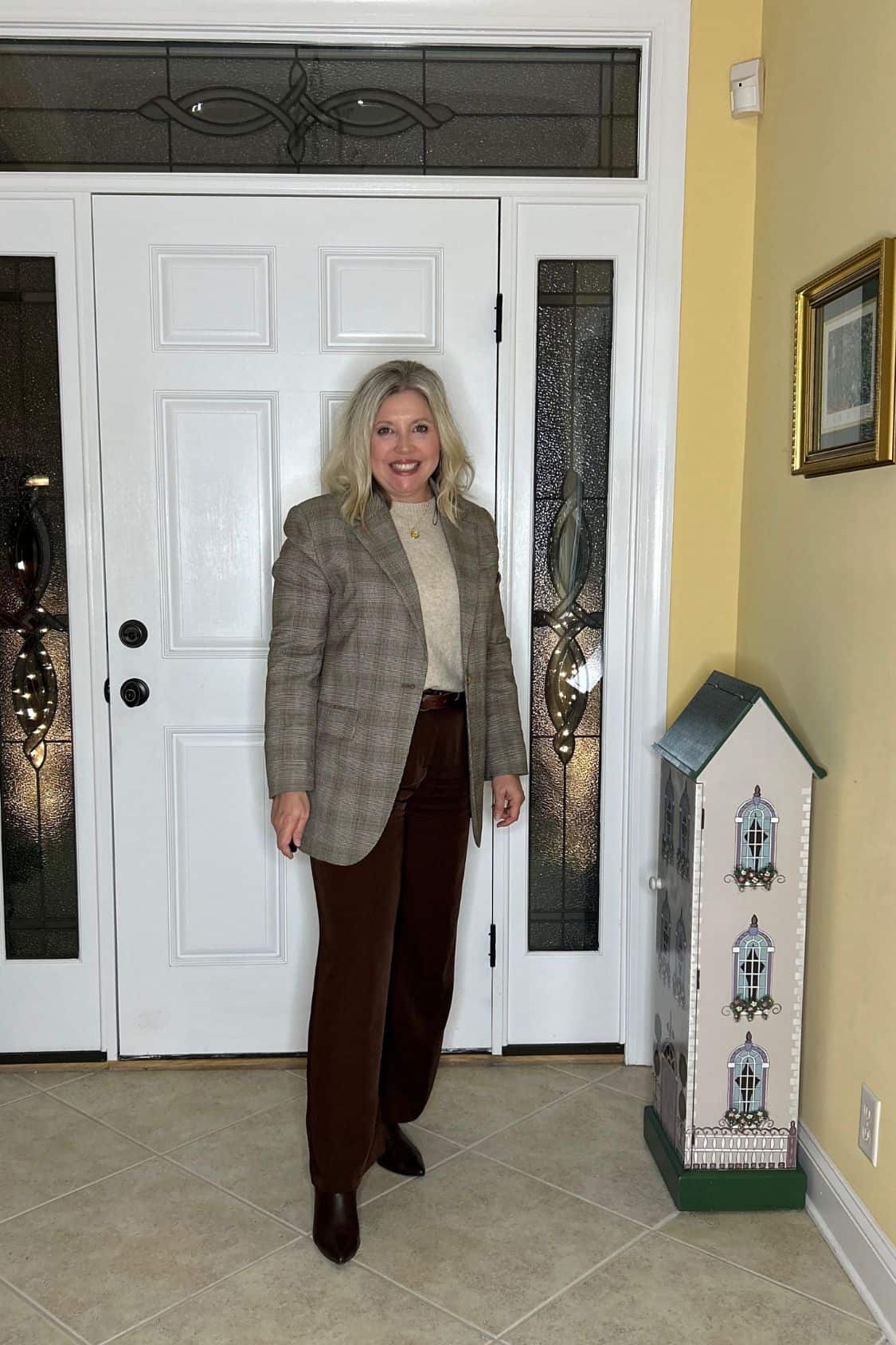
Blazer- Mango; sweater- Amazon; trousers- Amazon; boots- similar
Cardigans can work—if they’re the right kind.
Skip oversized knits that hang like blankets. Look for mid-length, lightweight options that skim the body. Bonus points for styles with built-in waist shaping or a slight A-line cut. Cropped cardigan can work wonders for accenting your waist, if they hit at the right place.

Cardigan- option; option; brown sweater – Old Navy; trousers- Abercrombie; boots- Mia; option
Balance your proportions.
If your mid-layer is long or loose, pair it with slim bottoms like straight-leg jeans or pants. Shorter tops can go with wide-leg pants or skirts. The goal is harmony, not hiding.
This is where your outfit starts to take form—layered, yes, but still sleek and pulled together.
Finish With a Polished Outer Layer

Your coat is the first thing people see—and the final layer that ties it all together.
Choose silhouettes that flatter, not flatten.
Skip boxy parkas unless you’re on the slopes. Instead, look for tailored wool coats, wrap styles, or belted trenches. These shapes follow your body’s lines without clinging or bulking up.
Length matters more than you think.
Mid-thigh to knee-length coats work best for most everyday looks. They cover enough to keep you warm but still show a peek of your outfit underneath. Shorter coats can work too—just pair them with high-rise pants or longer tops for balance.
Fit is everything.
A well-fitting coat should slide easily over your layers but still give you shape. Check the shoulders, sleeves, and waist—these areas should follow your frame, not overwhelm it.
Tailoring takes it to the next level.
Even a budget-friendly coat can look custom with a few tweaks. Hem the sleeves, nip the waist, or add darts if needed. The right fit turns a “just okay” coat into a go-to favorite.
A great coat doesn’t just keep you warm—it makes you feel finished, even on the coldest days.
Styling Tricks That Reduce Bulk Instantly
Layering doesn’t have to mean losing your shape. These simple styling tricks help you stay warm and look sleek—no puff in sight.
Stick to one color head to toe.
A monochrome outfit—like all black, navy, or cream—creates a long, lean line. Try cream straight-leg pants, an ivory sweater, and long white puffer coat. Add a wool hat in a similar tone for texture without breaking the flow.

Use vertical lines to your advantage.
Open cardigans, long coats, and even scarf placement can create vertical lines that slim and elongate. Think: a knee-length coat over straight-leg pants with a sweater tucked in just slightly at the waist.
Choose sleek shoes with structure.
Swap clunky boots for ankle boots with a slight heel, sleek loafers, or fitted tall boots. They add polish and help balance heavier layers up top.
Accessories Are Your Best Friend
This is where you get to have fun.
Instead of defaulting to neutral:
- Choose scarves, gloves, and hats in colors or patterns you love
- Let your accessories reflect you, not just what “matches everything”
Even one coat in a fun color or print can instantly elevate your winter wardrobe.
And if your coat is neutral? That’s the perfect backdrop for:
- Colorful sweaters
- Subtle prints
- Personality pieces
Try this outfit formula:
- Slim, high-rise trousers
- Lightweight fitted turtleneck
- Long belted coat in a neutral color
- Ankle boots with a block heel
- Soft scarf tucked neatly into the neckline
It’s warm, comfortable, and refined—with zero bulk.
Final Thoughts
Dressing warm after 50 doesn’t mean giving up style. You just need the right layers, smart fabric choices, and a few styling tricks to pull it all together.
Start with a sleek base layer, add structure in the middle, and finish with a coat that flatters—not flattens. Keep your lines clean, your fabrics light but warm, and your outfits balanced. That’s how you stay cozy without looking bulky.
